
Three small beginnings
Almost everything in the studio descends from three small moments. None of them was planned.
An 18th-century toast rack
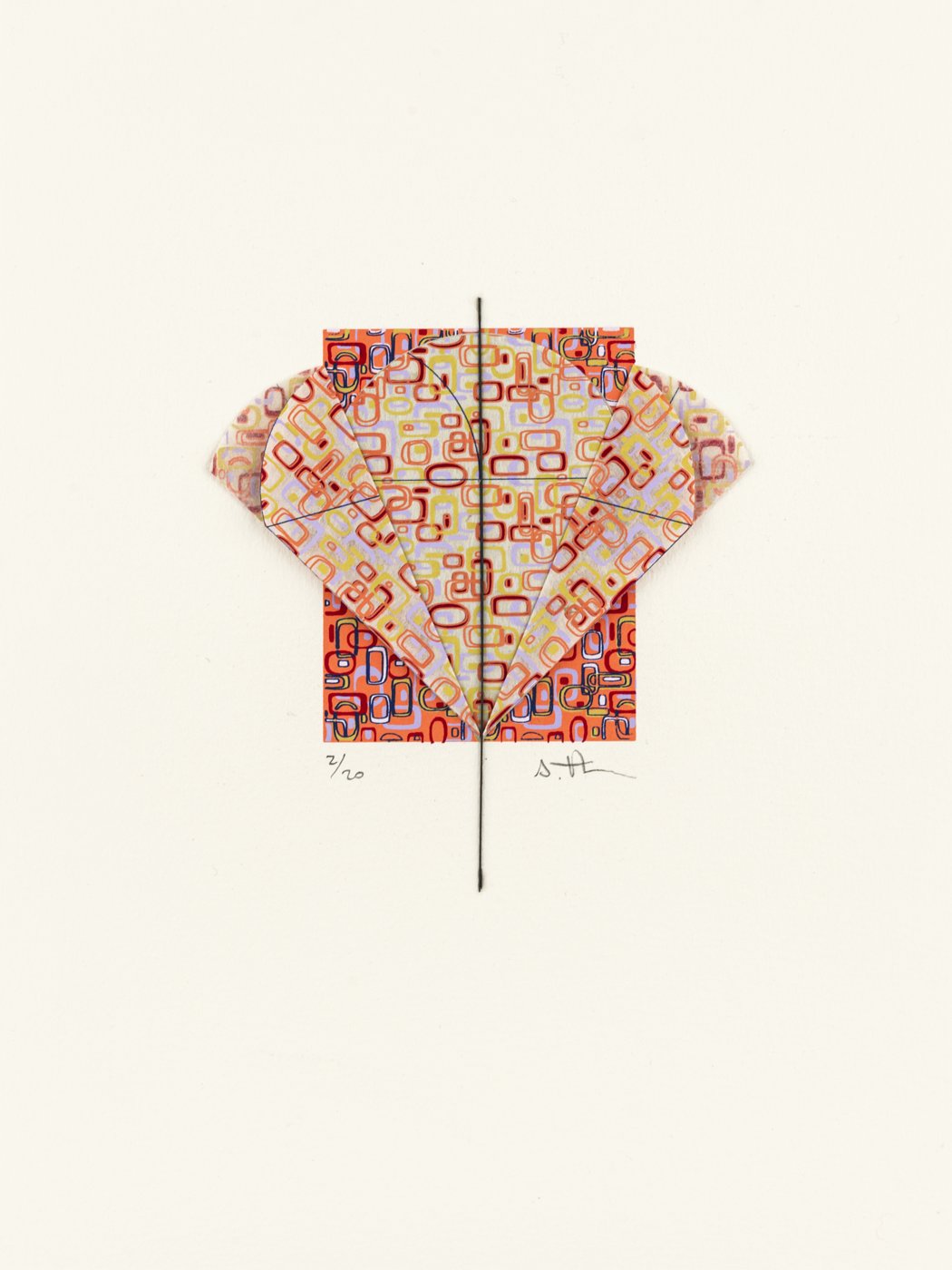
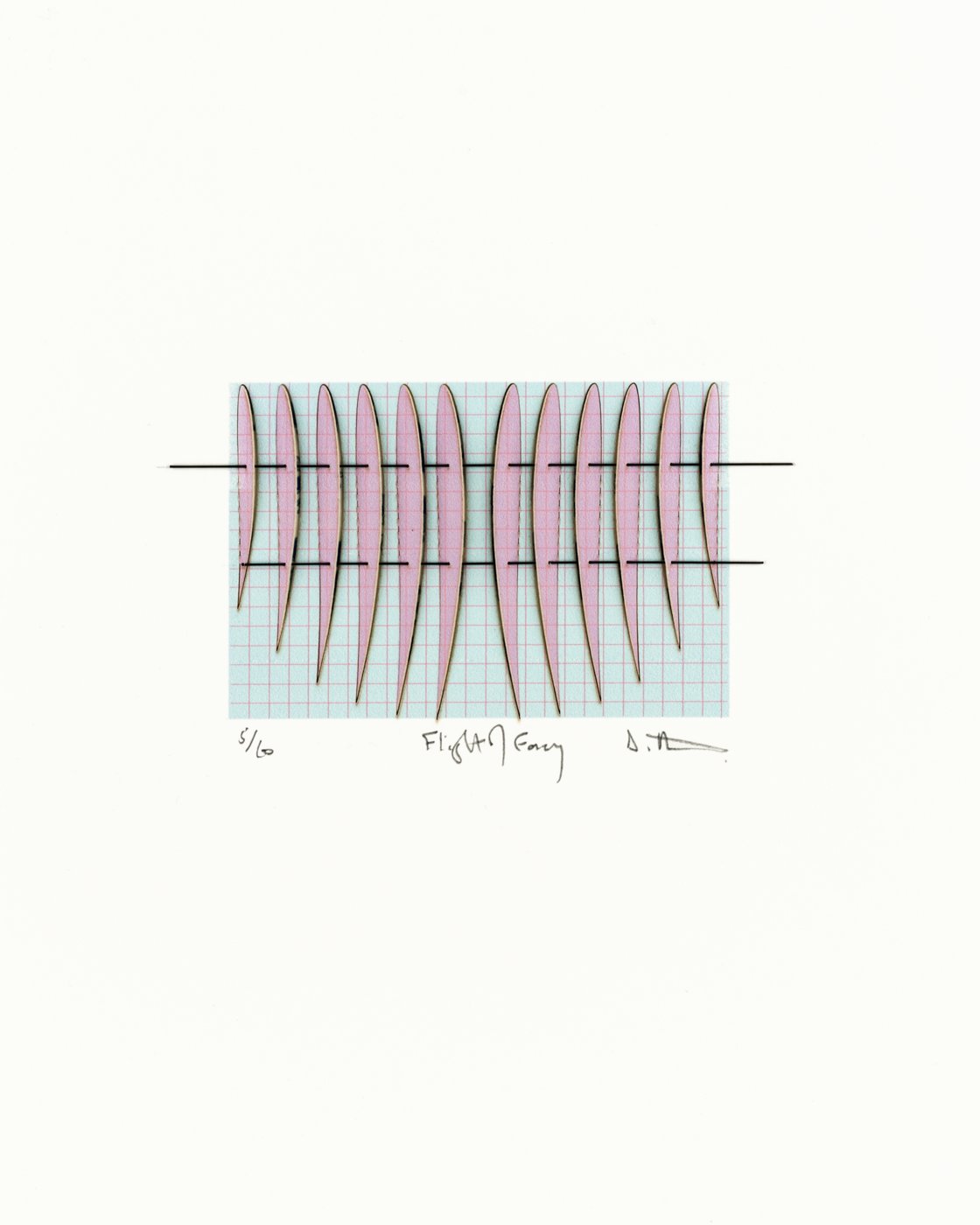
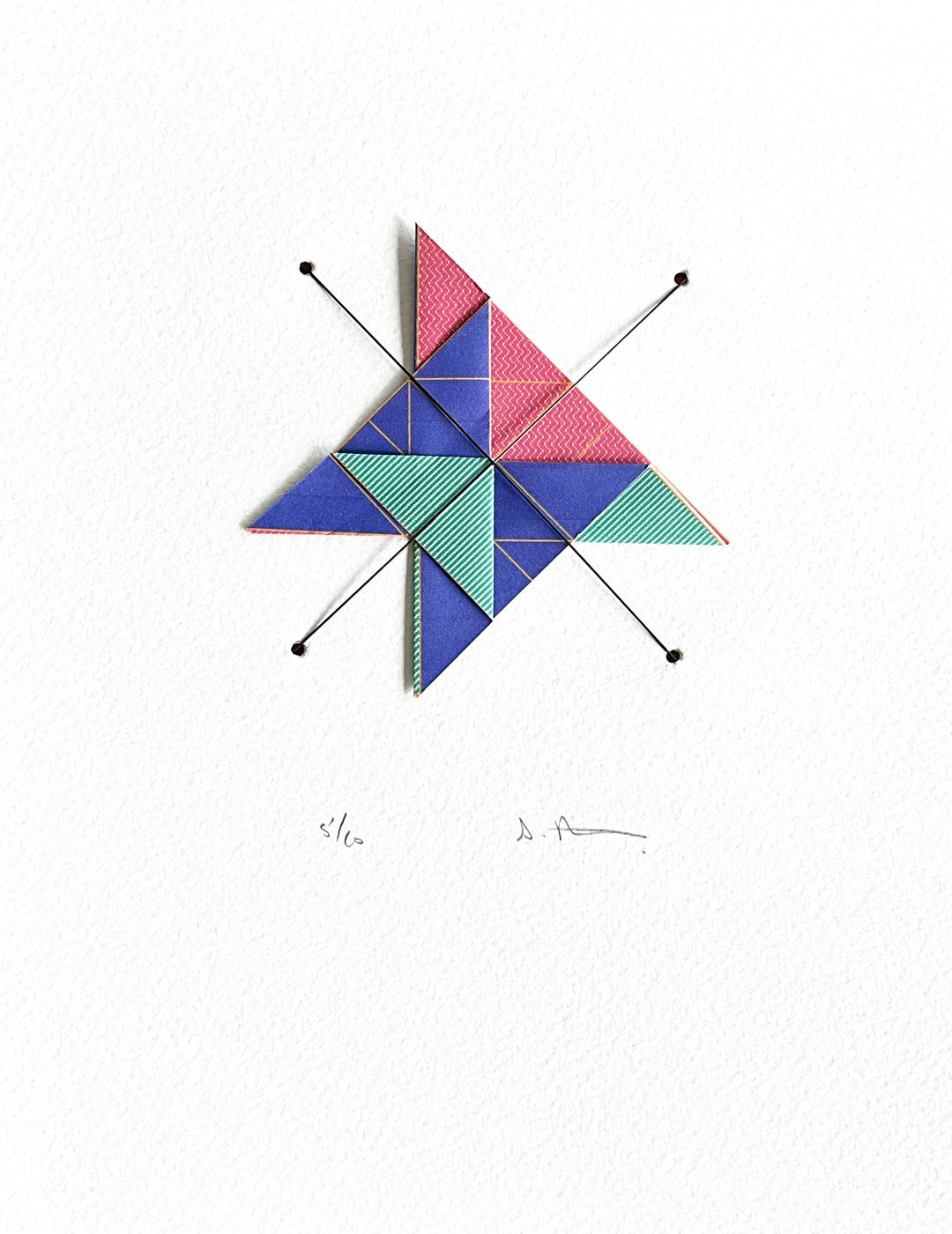
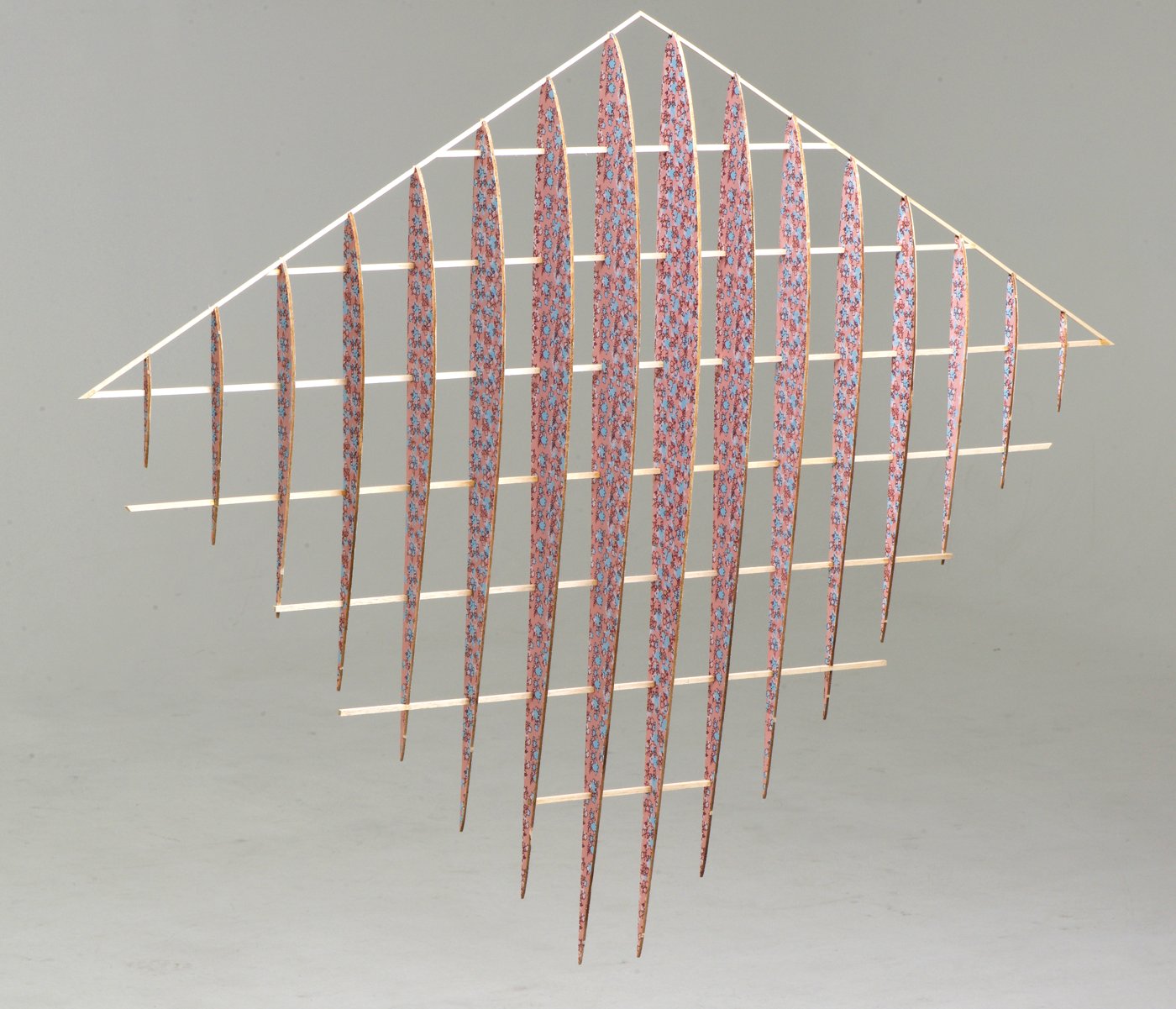
In the late 1990s the Victoria & Albert Museum invited Stephen to handle silverware from their collection and respond to it. He chose a Georgian silver toast rack, and made a kite based on its structure — glass-fibre rod, wood, and a single sheet of Japanese handmade paper.
That commission ended twenty years of self-imposed restraint and opened up an entirely new direction: three-dimensional printmaking. Almost every kite and wing piece since is descended from that toast rack.
An uncle’s aeroplane, 1951
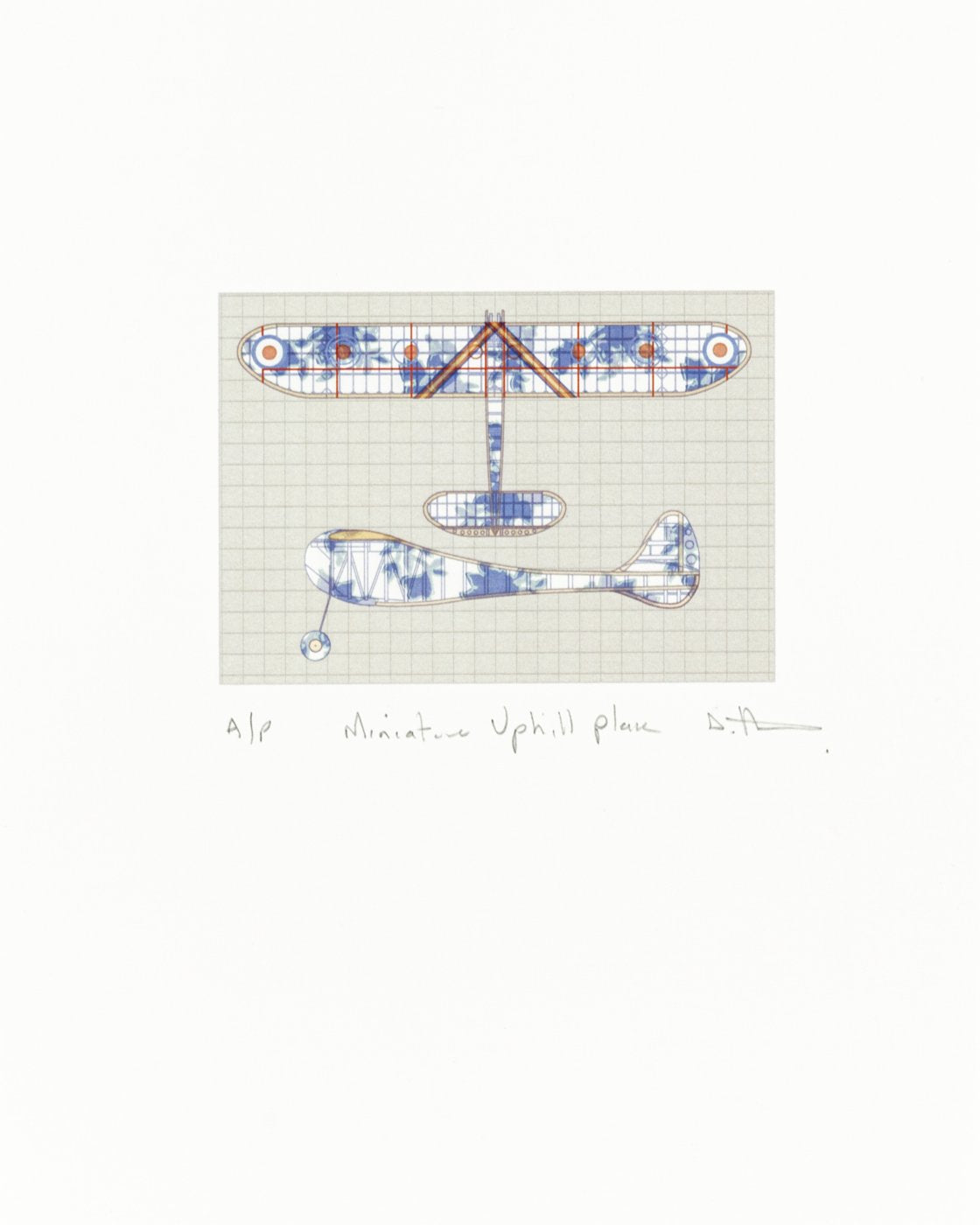
Stephen’s uncle Eric Higlett was seventeen years old in 1951 when his award-winning design for a model aeroplane — the ‘Hopit’ — was published in Aeromodeller magazine.
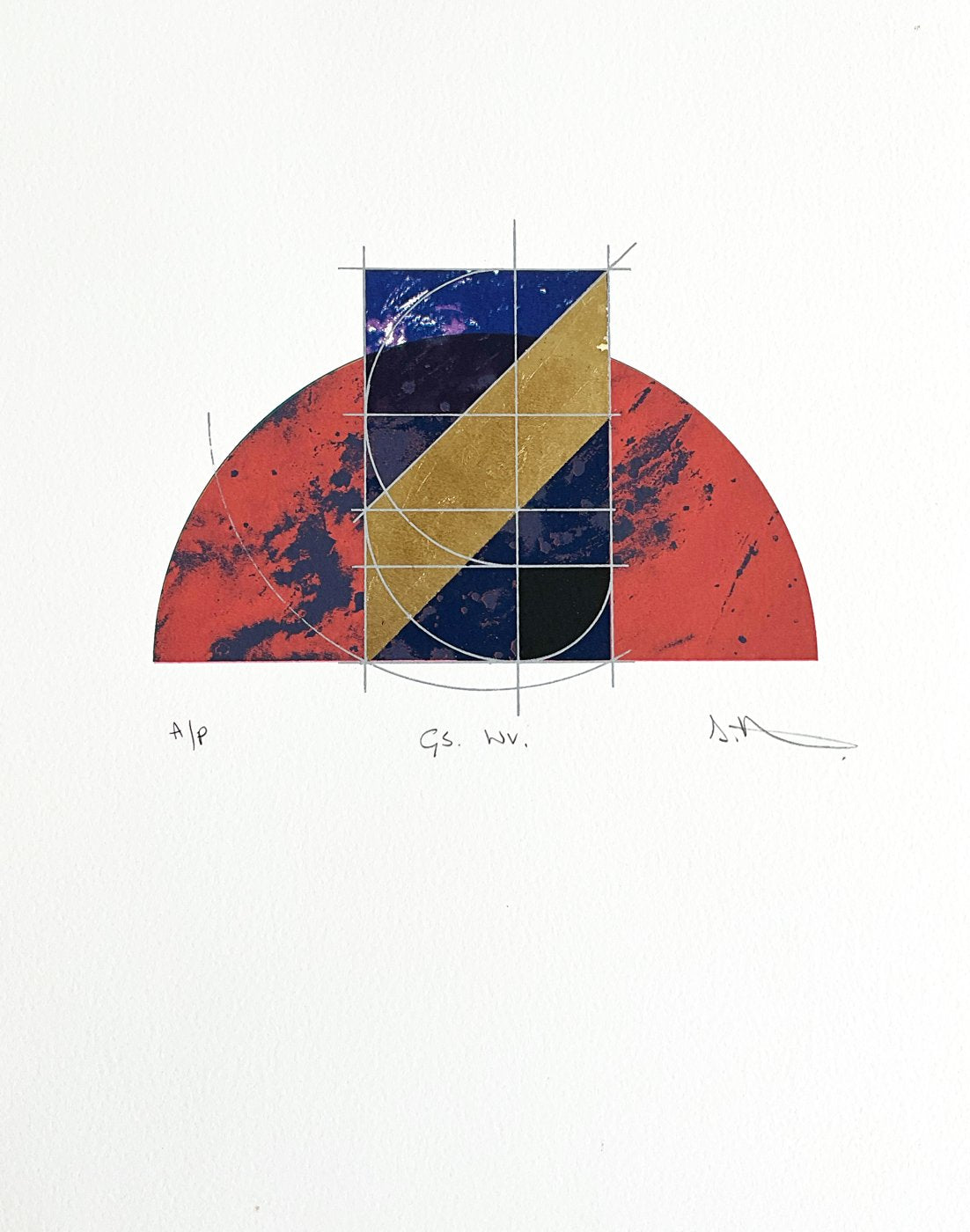
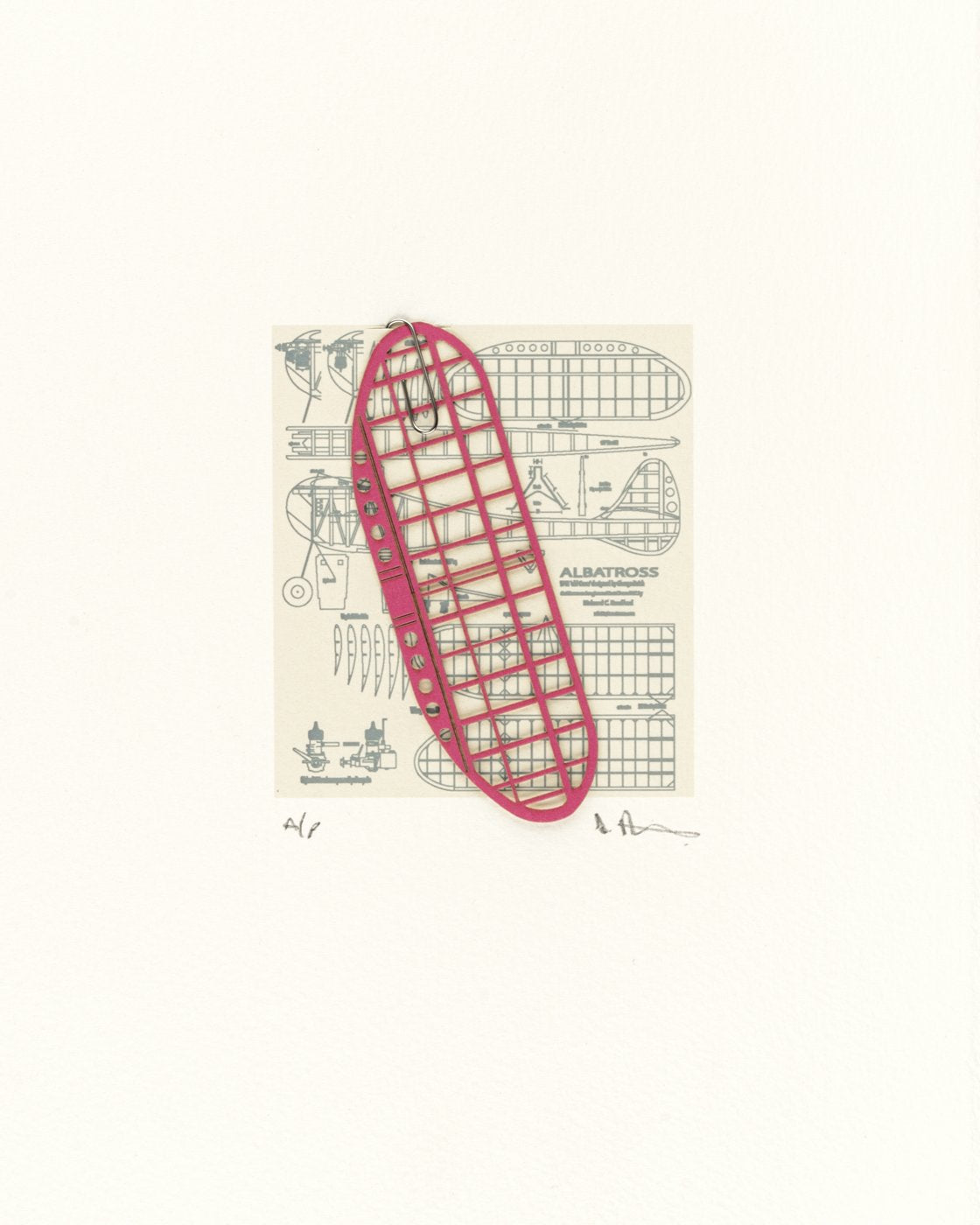
Stephen came across the article online a few years ago. Most of his aeroplane prints have descended from that small family discovery. The miniature print ‘Albatross’ is the most direct: a laser cut paper wing laid over a plan of a model aeroplane from the 1950s.
A Japanese kite book
The kite work began with one book: Tal Streeter’s The Art of the Japanese Kite, picked up second-hand in the 1980s. Streeter, an American sculptor, had spent years documenting traditional Japanese kite-makers — small workshops, handmade paper, traditional knots, glass-fibre rod.
Stephen’s kites pay homage to that tradition, with an English accent and an academic’s instinct for the materials. They are still, fundamentally, prints.